





US: States are learning on the fly about regulation and how to achieve responsible gaming
Monday 27 de March 2023 / 12:00
2 minutos de lectura
(Nashville).- The states that have legalized sports betting are reporting record levels of wagering and revenues, but with that growth comes questions about gambling addiction and whether regulators and sportsbooks are doing enough to fight it.
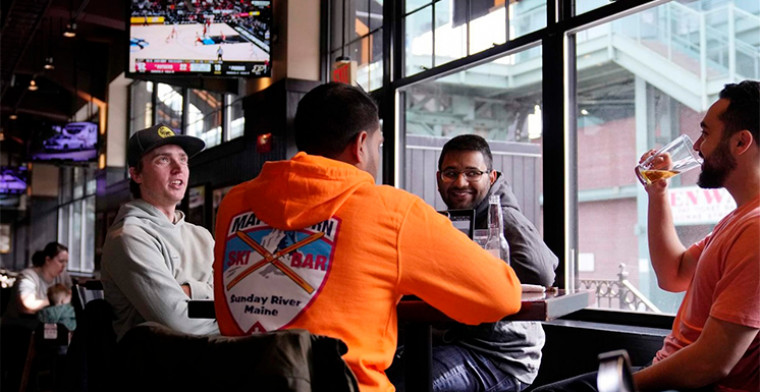
Two dozen states have active online sports betting, and other states are on the verge of joining them. As legalized gambling spreads, state legislatures, regulatory agencies, addiction experts, sportsbook operators and sports leagues all say they are working to address gambling addiction.
Jim Whelan, a psychology professor who runs the Institute for Gambling Education and Research and the University of Memphis Gambling Clinic backed by the state of Tennessee, said that in the past, gamblers seeking treatment for addiction at his clinic were older and almost evenly split by gender. Now, there’s been an influx of men ages 25 to 35.
“They pretty quickly got themselves, in a year or two, to where the gambling has created harms in their life,” Whelan said. He said spikes in problem gambling aren’t unprecedented, since they often happen when a new casino opens or a state adds a lottery game, “so I’m a little reluctant to say the sky is falling yet. We fear this is going to create some sort of addiction pandemic. We don’t know if it is or not.”
Whelan’s observations in Tennessee reflect similar patterns around the country.
Ohio launched its legal sports betting market Jan. 1. Immediately, its addiction helpline saw call volumes triple, said Mike Buzzelli, associate director of the Problem Gambling Network of Ohio.
The state saw the same trends as Tennessee: Younger men rather than the older, mixed-gender cohort of casino bettors. Additionally, he said, people were reaching the breaking point sooner than before sports betting became legal.
Previously, Buzzelli said, most callers reported that their gambling had been problematic for three to seven years, but now most bettors who call the helpline say they reached a problematic stage in less than a year.
Gamblers often seek treatment when they recognize their financial distress or because a loved one told them to get help, Whelan said.
So far, according to Whelan and other experts, counselors are finding they can help younger gamblers by using the time-tested behavioral therapy strategies they’ve employed with longtime problem gamblers. In addition, some states and sportsbook operators allow gamblers to put themselves on a “self-exclusion” list that prevents them from gambling for a certain period.
Learning From Others
In Ohio, officials are offering educational programs in schools and enforcing restrictions on advertising to students. Buzzelli said that as more funding for addiction programs continues to come in from sports betting tax revenue, the state could build partnerships with Ohio colleges.
He considers it a benefit that many states legalized online sports gambling before Ohio did. “We took a little bit longer, but that’s because we decided to really get prepared for it,” Buzzelli said. His group has educated social workers and addiction counselors on problem gambling and trained them to discuss luck and odds using the language of sports betting, so they can better reach bettors who need help.
“We were really able to look at what [other states] did right and what they did wrong and work with legislators,” he said.
Vermont also has moved more slowly. State Rep. Matthew Birong, a Democrat, said he has been working on sports betting legislation since early 2020. The latest version of his bill has cleared a House committee and could make it through the legislature this spring. Since he started working on the legislation several years ago, Birong has seen other states wrestle with how to prevent young people from being aggressively targeted by sportsbooks.
“There was a hesitance towards expanding that style of gambling with a lot of policymakers,” he said. “Yes, there was money on the table, but the big question was, we’re talking about legalizing something that has a dark side to it. Do we want to go there?”
Limits in the Vermont legislation include restrictions on marketing to young people and accepting wagers on some college sporting events, plus a ban on extending credit to bettors.
Matt Holt is vice chair of the Fantasy Sports and Gaming Association and founder and CEO of U.S. Integrity, which contracts with sportsbooks, regulators and sports leagues to help them identify suspicious gambling activity, abnormalities in referees’ calls or the misuse of insider information. Holt said some states rushed their sports betting programs into place because they were desperate for revenue during the confusing early days of the COVID-19 pandemic.
“Everyone was, ‘Legalize, launch, learn,’” Holt said. “We did the first two. Now we’re learning. I think the industry as a whole has embraced the fact that there were probably some holes to fill on the integrity and responsible gaming side.”
Holt thinks U.S. Integrity’s tracking technology could be used to identify problem gambling sooner and streamline self-exclusion lists. He added that, in general, the states legalizing now have more robust regulatory frameworks. Regulators and operators are learning side by side, he said. “Everyone’s starting to put those in place now,” he said. “I think if we check back in 12 months, we’ll see how successful it is.”
Under the Vermont bill, 2.5% (and no less than $250,000) of overall gambling tax revenue would pay for programs to combat gambling addiction. Some other states also reserve some gambling revenue for treatment or prevention, including Tennessee (5%) and Virginia (2.5%).
Birong said his bill would use sports betting revenue to publicize the availability of addiction resources provided by the state Department of Mental Health. For now, the state contracts with an outside helpline.
Gambling growth
Since launching in November 2020, Tennessee’s sports betting industry has grown rapidly.
In the first month of legal gambling, bettors placed $131.44 million in wagers, bringing the state $2.36 million in tax revenue. In January 2023, the most recent month for which data is available, that number jumped to $410.77 million in wagers and $7.27 million in tax revenue.
In fiscal year 2023, $1.2 million was allocated to the Department of Mental Health and Substance Abuse Services to combat gambling addiction. Thanks to increased revenues from betting, the fiscal year 2024 budget proposal nearly doubles that, to $2.3 million, according to department spokesperson Matthew Parriott.
Some of that funding helps support the Tennessee REDLINE, a hotline for people experiencing problem gambling. And while Parriott notes the hotline has seen “a significant increase” in calls since legalization, the “vast majority” of gambling calls are people seeking the latest winning lottery numbers or help with gambling apps rather than treatment, a phenomenon identified in other states.
That’s one reason why spikes in hotline calls are a “fairly weak predictor of gambling addiction,” said Keith Whyte, executive director of the National Council on Problem Gambling.
Tennessee’s gambling revenue also supports addiction research and treatment programs based at the University of Memphis and East Tennessee State University.
Virginia’s online sports betting program has been live for more than two years. State Del. Paul Krizek, a Democrat, is one of the lawmakers still focused on the issue. He led this year’s effort to create a new state advisory committee on problem gambling, establish March as Problem Gambling Awareness Month and commission a study to determine whether Virginia’s gambling regulatory bodies should be consolidated.
“I’m hoping we can take a pause on any more expansion for a while and really start to focus on the problem side of it,” Krizek said, noting recent efforts to expand poker and casino gambling in the state.
Legalization brought gamblers out of the shadows and made betting easier and safer, he said, “but by doing that it increases the numbers of players and the number of people engaged, and it does then increase the number of problem gambling issues, and that is something I’m not sure we were really prepared for.”
The amount of money wagered on sports in Virginia increased by more than 50% from 2021 to 2022, according to the state. Calls to the Virginia Council on Problem Gambling increased by a similar amount during the same period.
“We need to promote responsible gaming if we’re going to keep at it,” Krizek said. “We can’t have situations where people are going broke and becoming criminals because they’ve lost all their money. We’ve got to be very careful.”
Categoría:Gaming
Tags: Sin tags
País: United States
Región: North America





Event







iGaming Club Conference Cancun
24 de November 2025
Levon Nikoghosyan Confirms iGaming Cancun’s Success and Future LATAM Expansion
(Cancun, SoloAzar Exclusive).- The vibrant energy of iGaming Cancun has set the tone for a new chapter in the Latin American iGaming industry. Levon Nikoghosyan, CEO and Co-Founder of AffPapa and iGaming Club, shared his enthusiasm for the event’s debut in Mexico, highlighting its impact on the regional market and the company’s ambitious plans for the future.
Thursday 04 Dec 2025 / 12:00
iGaming Club Cancún 2025 Concludes Successfully with Strong Connections in Its First LatAm Edition
(Cancun, SoloAzar Exclusive).- iGaming Club Cancún 2025 came to a close last night with a comprehensive experience of conferences, networking, and the AffPapa iGaming Awards LATAM gala, consolidating itself as a unique space for operators, affiliates, and providers in the region.
Thursday 27 Nov 2025 / 12:00
iGaming Club Cancún 2025: Affiliates, Operators, and Innovation Take Center Stage on Final Day
(Cancun, SoloAzar Exclusive).- The second and final day of iGaming Club Cancún 2025 unfolds today, bringing together operators, affiliates, and select B2B providers in a unique networking and conference environment that highlights the evolving dynamics of the Latin American iGaming market.
Wednesday 26 Nov 2025 / 12:00
SUSCRIBIRSE
Para suscribirse a nuestro newsletter, complete sus datos
Reciba todo el contenido más reciente en su correo electrónico varias veces al mes.